Integrating AI in Paid Media Campaigns
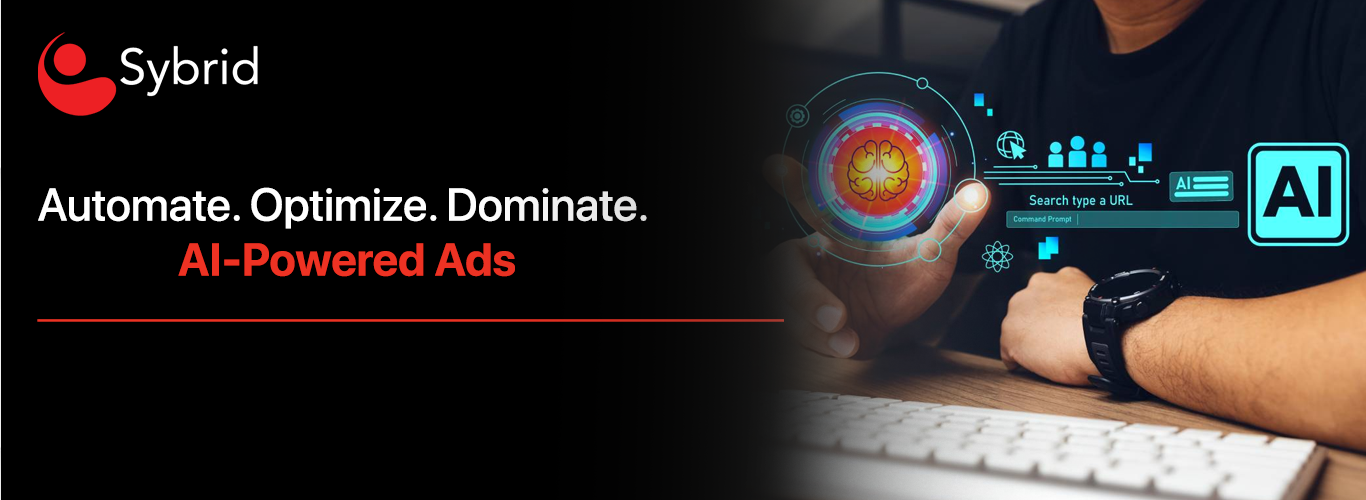
What if your ad campaigns could think, learn, and optimize themselves, delivering the right message to the right audience at the perfect moment? That’s exactly what’s happening today as businesses integrate AI in paid media campaigns. With automation, predictive analytics, and data-driven insights, marketers are seeing performance leaps of up to 30% higher ROI while spending less time on manual optimization.
In an era where attention spans are shrinking and ad competition is fierce, success isn’t about running more ads, it’s about running smarter ads. Integrating AI in paid media campaigns allows brands to analyze millions of data points, predict audience intent, automate bids, and test creatives in real-time. The result? Personalized experiences, better conversions, and reduced costs, all powered by intelligent decision-making.
Partnering with a trusted technology solutions provider like Sybrid, one of Pakistan’s top IT solutions and technology services companies, helps businesses turn this innovation into real growth. From strategy to deployment, AI-driven advertising is reshaping how digital campaigns are planned, executed, and optimized for success.
Let’s see how integrating AI in paid media campaigns can help you achieve the next level of marketing performance.

Benefits of AI in Paid Media Campaigns
AI revolutionizes paid media by automating routine tasks and optimizing every aspect of a campaign. Here are the top benefits:
- Precision Targeting & Personalization: AI-powered platforms analyze customer data across demographics, behavior, and interests to identify high-value audiences. This enables ultra-precise segmentation, so ads reach the right people at the right time. For example, Booking.com used predictive AI models to tailor offers and saw up to a 73% higher conversion rate. Personalization at this level leads to more engagement and sales, boosting ROI and customer loyalty.
- Automated Bidding & Budget Management: Machine learning systems can handle bid adjustments and budget allocation in real time. Instead of manually tweaking bids, AI algorithms process thousands of signals (like time of day, device, and user context) to optimize for your goals. This automation not only improves efficiency but also reduces wasted ad spend. Companies report cutting management time by up to 60% when they switch to AI-driven bidding. As an illustration, Procter & Gamble used AI agents for bids and saw a 20% increase in conversions while slashing ad management time by 60%.
- Real-Time Creative & Campaign Optimization: AI continually tests different ad creatives, headlines, and formats to find what works best. Dynamic creative optimization means the ad system can automatically swap images, ad copy, or offers based on real-time performance data. In fact, dynamic creative testing has been shown to triple campaign profitability, increasing ROAS from as low as 1.2x up to 3.5x. This kind of ongoing refinement keeps campaigns fresh and engaging, preventing creative fatigue. AI can even suggest new creative ideas; for instance, generative language models can help write ad text variations quickly, while AI-driven design tools can produce on-brand images and animations.
- Predictive Analytics & Insights: Beyond immediate optimization, AI provides predictive insights that guide long-term strategy. Machine learning models analyze historical campaign data to forecast future trends, like which audiences are likely to convert or how seasonality affects sales. Such insights help digital businesses plan better and allocate budgets more wisely. Companies using AI in marketing often see significant ROI uplifts; one McKinsey report found an average 27% ROI improvement within six months of adopting AI in their paid media strategy. In short, AI makes advertising smarter and data-driven.
Did you know?
By 2024, almost 1 in 5 marketers were dedicating over 40% of their budget to AI-powered ads, showing the huge confidence in these smart tools.
Implementing AI in Paid Media Campaigns
Now let’s turn theory into practice. Implementing AI in your campaigns involves choosing the right tools, setting up data infrastructure, and running continuous tests. Here’s a step-by-step approach:
1. Select the Right AI Tools & Platforms:
Start by choosing marketing platforms with AI features. Google Ads (Smart Bidding), Meta (Advantage+ campaigns and Dynamic Ads), and programmatic DSPs (like The Trade Desk) offer automated bidding, audience predictions, and creative optimization. Look for solutions that include machine learning audience segmentation, automated budget control, and predictive analytics. For example, Google’s Automated Bidding uses AI to meet your goals (CPC, CPA, or ROAS), while Meta’s AI-driven campaigns automatically test and push top-performing ad variants. New generative AI tools can even create personalized ad content: large language models (LLMs) like GPT-4 can draft multiple headline and description ideas in seconds. When selecting tools, consider your industry and goals; digital businesses in retail might benefit more from dynamic product ads, whereas B2B companies might lean on AI-driven account-based marketing solutions.
Partnering with an experienced IT solutions provider, such as a top software company like Sybrid, can help you integrate these tools smoothly. Sybrid’s innovation solutions team has expertise in AI-Powered Business Solutions and can customize platforms (from chatbots to analytics dashboards) to fit your needs.
2. Define Clear Goals and KPIs:
Before launching any campaign, set specific objectives. Are you aiming to increase sales, leads, or brand awareness? Define key performance indicators (KPIs) like click-through rate, cost-per-acquisition (CPA), or conversion rate. Clear goals guide the AI: for instance, if your goal is maximizing conversions, feed the AI a conversion-event value. AI systems are “goal-oriented,” so aligning them with your KPIs ensures they optimize the right metric. Write down your targets (e.g. “30% more website conversions” or “lower cost-per-lead by 20%”) and use them to configure automated bidding or budget rules. Well-defined objectives also let you measure success: you’ll know if the AI is beating historical performance.
3. Gather and Prepare Quality Data:
AI systems learn from data, so feed them the best information you have. This means first-party data like website analytics, CRM records, and past campaign results. Ensure your conversion tracking (e.g. pixel, GA4, CRM integration) is accurate and comprehensive. High-quality data might include customer demographics, purchase history, engagement metrics, and even offline sales. The richer your data, the smarter the AI becomes. For example, predictive models can use that data to build lookalike audiences of high-value customers or forecast seasonal demand. If needed, collect more data through customer surveys or A/B tests to train the algorithms. Remember to comply with privacy rules (GDPR, CCPA): anonymize data and respect opt-outs.
4. Pilot and Experiment (A/B Testing):
Don’t switch everything to AI at once. Start small with an experiment. For instance, create a test campaign using AI bidding and another with your old manual method. Compare which one yields better cost per result. Similarly, test different AI-adapted creatives: let an AI tool generate two ad copy variations or landing pages and let the AI optimize which to show. Use A/B or even multivariate testing continuously. AI excels at quickly finding the best-performing version. For example, try running one campaign with dynamic ads (showing personalized product selections) versus static ads. According to industry data, AI-personalized ads can dramatically increase engagement. Keep iterating: any winning element the AI uncovers can then be scaled to the larger campaign.
5. Monitor, Analyze, and Refine:
AI isn’t a “set and forget” magic bullet; it works best with human guidance. Regularly review dashboards and key metrics. Most platforms will provide reports on how the AI is pacing towards goals. If performance lags, adjust your strategy: maybe refine targeting parameters or update creatives. Use the insights AI provides – for instance, if an AI tool identifies a certain audience segment as high-value, focus more budget there. Keep an eye out for anomalies (like big drops in clicks) that might signal tracking issues. In doing so, you combine Sybrid’s managed services expertise (for ongoing campaign management) with your own marketing savvy.

In the end, integrating AI in paid media campaigns isn’t just a passing trend, it’s shaping the next era of digital marketing. From hyper-personalized ad targeting to real-time campaign optimization, AI is redefining how brands connect with audiences and measure success. The real advantage lies in using these intelligent tools not to replace creativity, but to amplify it, helping marketers make smarter decisions, faster. As the competition intensifies and consumer behavior evolves, businesses that embrace AI-driven advertising today will lead the digital landscape tomorrow.
At Sybrid, we focus on delivering real-world tech and process solutions that drive results. As one of the top IT solutions and technology services companies in Pakistan, we specialize in AI-powered business solutions that make a measurable impact. With expertise in building and deploying conversational bots, AI agents, and secure systems, we help organizations integrate modern tools into their operations securely and at scale. From connecting AI to live enterprise data to supporting adoption across teams, our services align with the latest generative AI trends and services for 2025, ensuring relevance and long-term value. Recognized as the best managed IT services and digital business solutions provider, our approach is grounded, practical, and tailored to real business needs. If you’re looking to bring AI into actual business use, our team is ready to help.
If you’re ready to upgrade your marketing strategy with smart automation and data-driven insights, Sybrid’s team of experts can help you turn AI-powered possibilities into real-world results.
Frequently Asked Questions (FAQs)
Q1: What is the role of AI in paid advertising?
A: AI plays a key role in optimizing paid advertising by analyzing audience behavior, predicting performance trends, and automating tasks such as bidding, targeting, and ad placement. This helps marketers achieve higher ROI, reduce costs, and improve overall campaign effectiveness.
Q2: What is the 30% rule in AI?
A: The 30% rule in AI marketing generally refers to using automation for up to 30% of your total marketing operations, ensuring that the remaining 70% maintains human creativity and strategy. This balance helps prevent over-reliance on automation while still benefiting from AI-driven efficiency.
Q3: How is AI used in marketing?
A: AI is widely used in marketing for personalization, predictive analytics, chatbots, programmatic advertising, and customer segmentation. It helps marketers understand user intent, create more relevant campaigns, and optimize performance in real time across multiple channels.
Q4: What are the 7 types of AI?
A: The seven main types of AI include:
- Reactive Machines
- Limited Memory
- Theory of Mind
- Self-aware AI
- Artificial Narrow Intelligence (ANI)
- Artificial General Intelligence (AGI)
- Artificial Superintelligence (ASI)
Q5: What are the benefits of AI in paid media campaigns?
A: AI enhances precision targeting, automates campaign management, and improves ad performance through data-driven optimization. It helps advertisers deliver more relevant content, optimize budgets efficiently, and achieve better engagement rates.
Q6: How can businesses start integrating AI into their paid media campaigns?
A: Businesses can begin by selecting the right AI tools, defining measurable goals, and leveraging quality data for training. Collaborating with a trusted technology partner like Sybrid ensures seamless integration of AI solutions tailored to your business objectives.