AI x Creativity 2025: The Future of Art, Music & Content Creation
The fusion of artificial intelligence (AI) and creative fields is driving unprecedented innovation across art, music, and content creation. Modern AI tools – from deep learning models to generative algorithms – can now analyze massive datasets of creative works to produce new music tracks, images, scripts, and more. For example, a 2025 industry report found that 60 million people used AI to create music in 2024. These tools don’t replace human creativity so much as amplify it, offering artists and businesses new ways to experiment, personalize content, and automate tedious tasks. In the sections below, we explore the latest AI advances in music, visual arts, and content creation, discuss challenges like copyright and bias, and look ahead to how AI and creativity will evolve together.
For expert AI integration, contact Sybrid today to bring these innovations into your business.
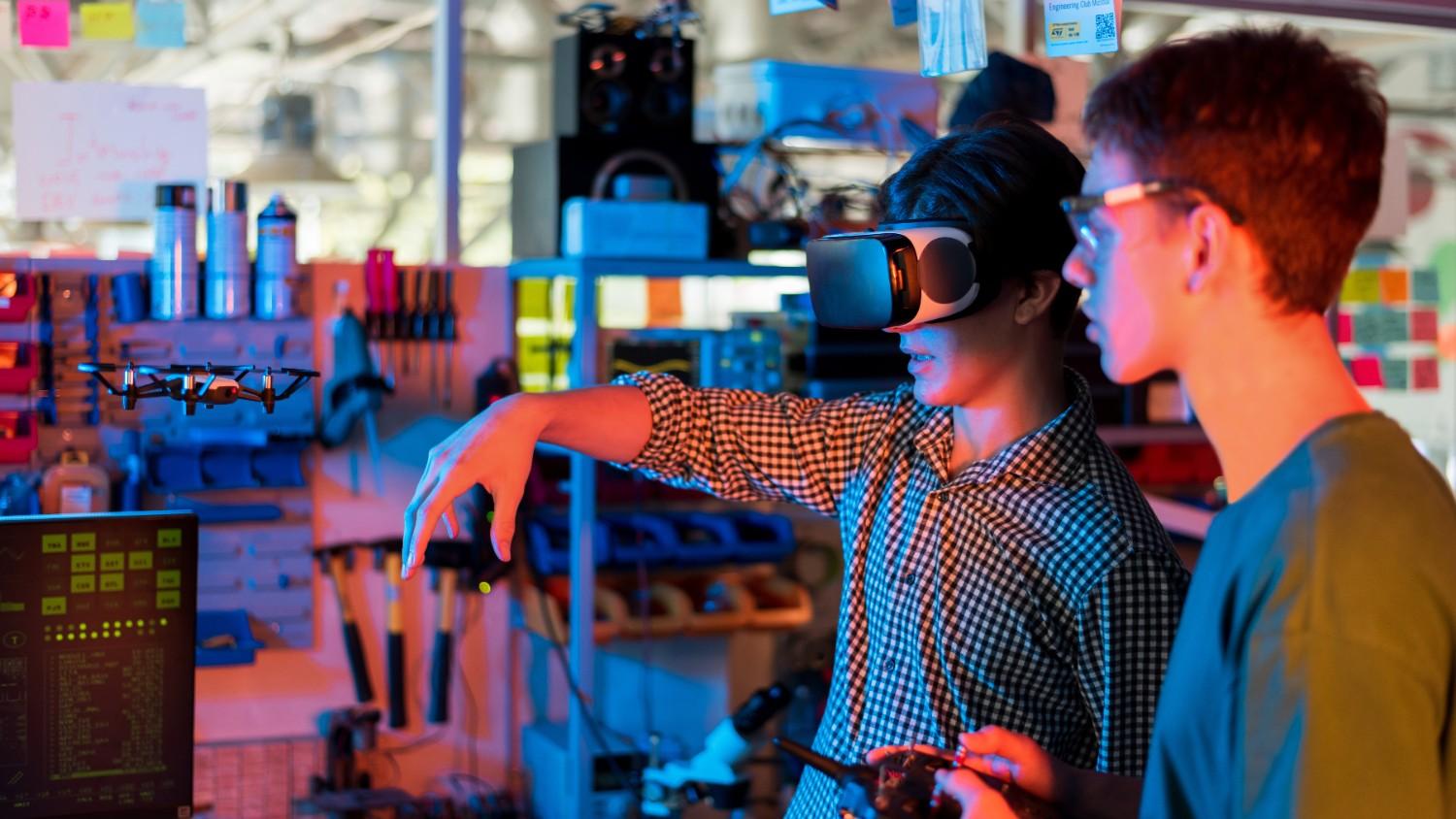
AI in Music Composition
AI algorithms are increasingly composing original music and assisting musicians. Generative AI tools like AIVA, Amper Music, and OpenAI’s Jukebox analyze vast libraries of existing songs to identify patterns in melody, harmony, and rhythm, then create new compositions in specific genres or moods. Industry data show this trend is booming: the global AI music market was about $642.8M in 2024 and is projected to reach $3 billion by 2030. In practice, platforms can now produce high-quality background scores, jingles, or fully structured songs with minimal human input – for instance, AI can suggest chord progressions or lyrics on demand. Experts predict AI will permeate every stage of music production, from automatically sorting and A&R-ing tracks to tweaking mixes so songs fit a label’s “sound”.
However, this surge of AI-generated music also raises important questions. In listener surveys, over 80% said they prefer human-made music and demand transparency – for example, 81.5% of UK listeners think purely AI-created tracks should be labeled, and 78.5% believe an artist’s voice should not be used by AI without permission. (Even artists like Max Richter have called for limits on training AI with copyrighted songs.) Such concerns are driving new regulations: for instance, Tennessee’s 2024 “ELVIS Act” makes it illegal to use AI to mimic a singer’s voice without consent.
For musicians, producers, or labels looking to harness AI for composition or audio analytics, Sybrid can implement customized AI music solutions. From building AI-driven mixing tools to integrating generative music platforms, Sybrid helps creative teams leverage the latest AI technology.
Contact Sybrid today to explore AI-powered music production for your next project.
AI in Visual Arts
AI is equally transformative in visual creativity. Advanced models such as Generative Adversarial Networks (GANs) and diffusion models are now capable of producing paintings, illustrations, and designs from simple text prompts. For example, tools like Midjourney, DALL·E, and Stable Diffusion have become household names for AI art; a recent guide lists Midjourney for its “artistic results” and Stable Diffusion for its customizable outputs. These systems let users generate new artwork in the style of famous artists or entirely novel styles by feeding in descriptions. Even mainstream design software now incorporates AI: Canva’s Magic Studio (powered by GPT-4) can take a user’s prompt (e.g., “create a presentation slide on AI”) and automatically assemble graphics and layouts.
Beyond creation, AI is helping preserve and restore visual art. Researchers at MIT demonstrated an AI-based process that scans a damaged painting to map missing areas, then uses AI to digitally reconstruct the lost details. The computer-generated restoration is printed on a thin polymer film, which is overlaid on the original canvas. In one test, this method repaired a 15th-century painting in hours – a task that would have taken conservators about 200 hours by hand. Such techniques could make it feasible to restore thousands of previously neglected artworks and widen public access to art.
For artists, designers, or cultural institutions interested in AI-driven imagery, Sybrid offers end-to-end solutions. Whether it’s setting up AI art generators (text-to-image or image-to-image) or integrating style-transfer features into your workflow, Sybrid can help.
Contact us today to bring AI-powered design and restoration tools into your creative toolkit.
AI in Content Creation
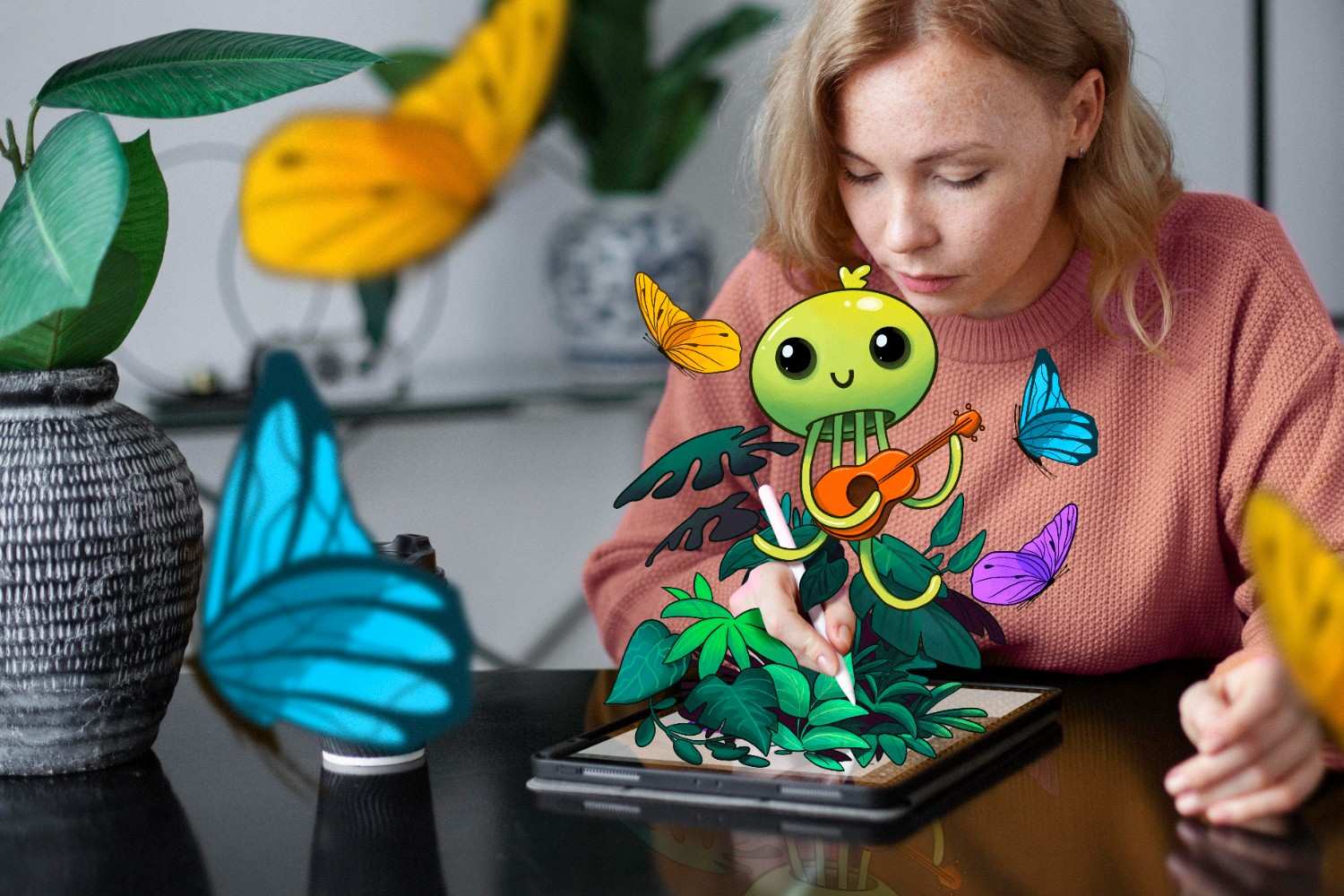
AI’s impact extends to text and multimedia content as well. Natural Language Processing (NLP) models like OpenAI’s GPT-4 (and successors) can generate human-like text for articles, marketing copy, scripts, and more. The adoption is accelerating: one 2025 survey found 90% of content marketers plan to use AI in their marketing efforts (up from 65% in 2023), and already 47% of marketers say they use AI tools to generate content. These tools can draft blog posts, brainstorm ideas, summarize data or even write code snippets on demand. Meanwhile, design tools are gaining AI features: for instance, Canva’s Magic Write (GPT-powered) can take a brief and produce polished text, while Magic Design uses AI to generate layouts and images from prompts. Adobe’s Sensei AI and other platforms similarly offer “generative fill” for photos and automated design suggestions.
AI also enhances personalization and efficiency in content workflows. Recommendation systems on streaming and news platforms use AI to curate what each user sees. In marketing, AI can automate repetitive tasks (like scheduling posts or A/B testing) and help analyze audience data. For example, AI-driven tools can produce 100 ideas for a campaign in seconds – a speed far beyond any human team. This frees creators to focus on strategy and creativity. (At the same time, professionals note the pitfalls: AI often regurgitates familiar phrases and can carry biases, so human oversight remains crucial.)
Common AI tools in creative content include:
- GPT-based writers: ChatGPT, GPT-4, Jasper, Claude, etc., for drafting and editing text.
- Design assistants: Canva Magic Studio, Adobe Firefly/Sensei, which generate images or layouts from text.
- AI video and audio tools: Synthesia (AI video), podcast-editing assistants, etc.
- Content analytics: AI summarizers and SEO optimizers to refine drafts.
For businesses and creators aiming to boost productivity with AI, Sybrid can integrate these solutions. We can help deploy custom language models for your domain, set up AI design assistants, or build recommendation engines.
Challenges and Ethical Considerations
The growth of AI in creative fields brings important ethical and legal challenges. Key issues include:
- Copyright & Ownership: AI models are typically trained on vast datasets of existing art and media, which may include copyrighted works. Questions arise over who owns AI-generated content. Recent laws are addressing this: for example, Tennessee’s “ELVIS Act” (2024) explicitly prohibits using AI to mimic a person’s voice without permission. Many artists and audiences demand transparency – in one survey, 78.5% of music listeners said an artist’s voice should not be used by AI without consent. Globally, creators are pushing for clearer rights and licensing frameworks around AI-generated art.
- Bias & Homogenization: AI learns from existing styles and trends, so it can inadvertently reproduce stereotypes or reduce diversity. If training data is not inclusive, the output may marginalize certain groups. Observers worry about “AI homogenization,” where everything starts to look or sound the same. For instance, an AI trained on pop music might churn out tracks that sound formulaic. One study notes AI often fails to inject truly novel ideas, since its suggestions come from pre-existing datasets.
- Transparency & Trust: Audiences increasingly care who made the art. Over 80% of surveyed music fans said they value human-made music more than AI tracks. As a result, creators and platforms may need to disclose AI’s role in content generation. Misleading uses (like deepfakes or undisclosed AI voice mimicry) can erode public trust.
Addressing these concerns requires thoughtful regulation and practice. Artists call for clear consent mechanisms, data scientists stress bias mitigation, and technologists develop watermarking or labeling tools. Sybrid understands these challenges and emphasizes responsible AI. We help clients implement AI systems with ethical safeguards – for example, using filtered training data or building audit trails.
To ensure your AI-powered projects respect copyright, fairness, and transparency, contact Sybrid for guidance on responsible AI integration.
The Future of AI and Creativity
Looking ahead, AI and human creativity will continue to inspire each other. Rather than “stealing” jobs, many experts argue AI is entering the same creative revolution that past technologies sparked. As one commentator noted, when photography made traditional portrait painting obsolete, painters responded by inventing Impressionism and Surrealism. In the same way, AI is seen as “inviting us to rethink our very definition of creation”.
We can expect even more co-creative tools: for example, writers may use AI “co-pilots” for brainstorming, composers may work alongside AI “muse” programs, and designers might leverage real-time AI suggestions. New media will blend AI as a partner: imagine AR/VR exhibits that react to visitor movements or films whose soundtracks adapt using generative AI. Creative businesses will harness AI for hyper-personalization (e.g., bespoke music or artwork for each user), interactive storytelling, and novel art forms we have yet to imagine.
Through it all, human intuition and emotion remain central. AI excels at pattern recognition and speed; humans provide context and meaning. Together, they will unlock creative frontiers. As Sybrid’s own experience shows, embedding AI into workflows can spark fresh ideas and efficiencies. Whether you want to prototype an AI-based art installation or use machine learning to analyze audience trends, Sybrid has the expertise to help.
Get in touch with Sybrid today to lead your industry with AI-driven innovation in art, music, and content.
Frequently Asked Questions (FAQs)
Q: What is generative AI in the creative industry?
A: Generative AI refers to machine learning models that create new content (music, images, text) from scratch. In creative industries, it means using algorithms (like GPT or GANs) to compose songs, paint pictures, write articles, etc. For example, tools like DALL·E generate images from text prompts, and models like AIVA compose original music pieces.
Q: How is AI being used in creative industries?
A: AI is being used across creative industries for tasks like generating music, creating digital art, writing content, designing graphics, editing videos, and analyzing audience trends. Tools like Midjourney, ChatGPT, DALL·E, and Adobe Firefly are helping artists, marketers, and designers produce high-quality work faster and more efficiently.
Q: How is AI used in creativity?
A: AI supports creativity by acting as a collaborative tool. It can suggest ideas, remix styles, automate production tasks, and enable real-time experimentation. For example, writers use AI to brainstorm content, artists use AI to visualize concepts, and musicians use it to generate melodies or beats.
Q: What is the future of AI in the creative industry?
A: The future is highly collaborative. AI will continue to enhance creative workflows, offering co-creation tools that blend human intuition with machine precision. Expect more personalized content, immersive art experiences, AI-curated performances, and real-time generative storytelling. AI won’t replace creatives—it will expand their capabilities.
Q: How can AI be used in creative jobs?
A: AI can be used to automate routine tasks (like layout design, transcription, editing), enhance ideation (through AI writing and brainstorming tools), and personalize outputs (like custom visuals or dynamic soundtracks). For creative professionals, this means more time for strategy, storytelling, and innovation.